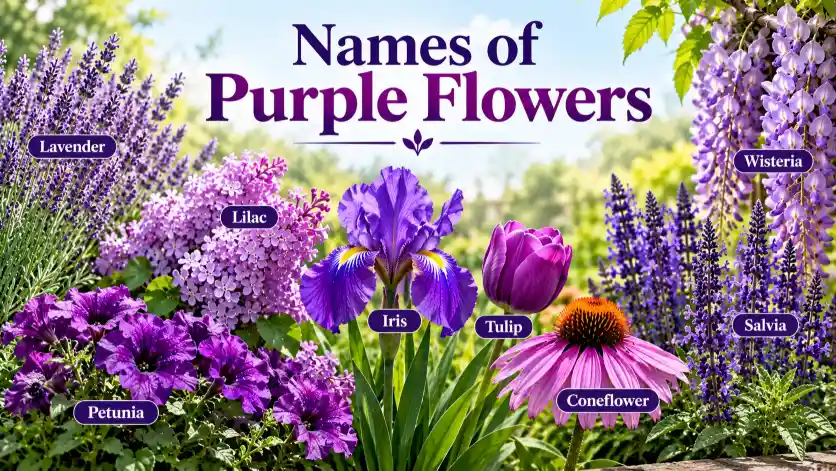
Names of purple flowers include lavender, lilac, violet, iris, wisteria, petunia, and purple coneflower. These flowers come in many shades, from soft lavender to deep violet. Some are known for their sweet fragrance, while others stand out because of their bold shapes and bright colors.
Purple blooms can add beauty to gardens, bouquets, flower beds, and outdoor spaces. The right choice depends on the flower’s growing needs, bloom season, size, and appearance.
Popular Names of Purple Flowers
Purple flowers come in many forms, including delicate petals, tall spikes, and large clusters. The following varieties are popular choices for gardens and floral arrangements.
1. Lavender
Lavender is known for its slender purple flower spikes and soothing herbal scent. It grows well in sunny locations with well drained soil. Its flowers are also used in dried arrangements, sachets, and decorative crafts.
2. Lilac
Lilac produces clusters of small, fragrant flowers in shades of purple, lavender, and pale violet. These shrubs often bloom in spring and make attractive additions to gardens and outdoor borders.
3. Violet
Violets are small, delicate flowers that often grow in purple shades. Many varieties suit shaded areas, containers, and garden borders. Their simple shape makes them easy to recognize.
4. Iris
Iris flowers have distinctive petals and striking shapes. Purple varieties range from pale lavender to deep violet. They are popular in flower beds because their upright leaves and colorful blooms add structure to garden designs.
5. Wisteria
Wisteria is a climbing plant that produces long, hanging clusters of flowers. Purple varieties can cover pergolas, fences, and other strong supports with beautiful blooms. The vines need regular management because some types grow vigorously.
6. Petunia
Petunias produce trumpet shaped flowers in several purple shades. They are common choices for pots, hanging baskets, and sunny flower beds. Many varieties bloom for a long period during warm weather.
7. Purple Coneflower
Purple coneflower, also called Echinacea purpurea, has purple pink petals around a raised central cone. It grows well in sunny gardens and can attract bees and butterflies.
8. Allium
Allium flowers form round clusters made up of many tiny blooms. Purple varieties add height and interesting shapes to garden borders. Their globe like flower heads can also create contrast among smaller plants.
9. Salvia
Salvia produces upright spikes of purple, violet, or blue purple flowers. Many varieties grow well in sunny spots and attract pollinators. Their tall stems make them useful for adding color and height to garden beds.
10. Clematis
Clematis is a climbing plant with large flowers that may have four or more broad petals. Purple varieties are often grown along fences, trellises, and garden walls. Different types bloom during different seasons.
More Names of Purple Flowers
Beyond the most familiar varieties, many other flowers display beautiful purple tones. These options offer different flower shapes, plant sizes, and growing seasons.
| Flower Name | Distinctive Feature |
| 11. Hyacinth | Fragrant clusters of small, star shaped flowers |
| 12. Hydrangea | Large flower heads in suitable purple varieties |
| 13. Delphinium | Tall spikes of blue purple or violet blooms |
| 14. Foxglove | Bell shaped flowers arranged along tall stems |
| 15. Verbena | Small flowers grouped into rounded clusters |
| 16. Morning Glory | Trumpet shaped flowers that grow on climbing vines |
| 17. Pansy | Colorful petals with contrasting markings |
| 18. Crocus | Small flowers that often bloom in early spring |
| 19. Aster | Daisy like flowers with yellow centers |
| 20. Balloon Flower | Inflated buds that open into star shaped blooms |
Growing tip: A flower’s color may vary by species, cultivar, and growing conditions. Check the specific variety before planting if you want a consistent purple shade.
Light Purple Flowers for Gardens
Light purple flowers create a soft look in gardens and floral arrangements. Their pale shades pair well with white, pink, and blue blooms. They can also brighten spaces without creating a strong contrast.
- Lavender: A fragrant option for sunny areas and herb gardens.
- Lilac: A spring blooming shrub with soft purple flower clusters.
- Violet: A delicate choice for borders and suitable shaded spots.
- Purple Hyacinth: A fragrant spring flower with dense blooms.
- Light Purple Petunia: A colorful option for containers and hanging baskets.
- Crocus: A small flower that can bring early season color to a garden.
- Purple Columbine: A distinctive flower with graceful, spurred petals.
- Scabiosa: A rounded flower with a soft, pincushion like shape.
These flowers suit different garden styles. For example, lavender works well in sunny, well drained locations, while some violets prefer cooler or shadier areas.
Dark Purple Flowers for a Bold Look
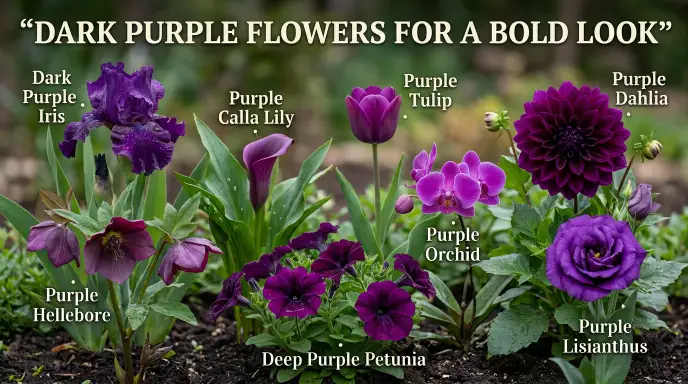
Dark purple flowers add depth and contrast to flower beds, bouquets, and decorative arrangements. Their rich shades often stand out beside white, yellow, and pale pink blooms.
- Dark Purple Iris: A dramatic flower with broad, striking petals.
- Purple Calla Lily: An elegant flower with a smooth, curved shape.
- Dark Purple Petunia: A useful choice for containers and hanging baskets.
- Purple Tulip: A spring flower available in deep violet and plum shades.
- Purple Dahlia: A decorative bloom with layered petals.
- Purple Orchid: A distinctive flower often grown indoors or in suitable warm climates.
- Purple Hellebore: A flowering perennial that can bloom in late winter or early spring, depending on the variety.
- Purple Lisianthus: A rose like flower often used in bouquets.
When choosing dark purple varieties, consider how their colors will look beside nearby plants. Pale flowers and green foliage can help their deeper shades stand out.
Fragrant Purple Flowers
Some purple flowers are valued for their scent as much as their appearance. They can add a pleasant fragrance to gardens, patios, and floral displays.
| Flower | Fragrance and Appeal |
| Lavender | Herbal, fresh scent |
| Lilac | Sweet fragrance, especially during spring bloom |
| Hyacinth | Strong, sweet floral scent |
| Heliotrope | Often described as having a vanilla like fragrance |
| Stock | Sweet scent and clustered flowers |
| Sweet Pea | Delicate fragrance with climbing growth |
| Wisteria | Fragrant hanging flower clusters in many varieties |
| Purple Dianthus | Spicy, clove like scent in fragrant varieties |
Fragrance varies between varieties and can be stronger in certain weather conditions. If scent is important, check the specific cultivar before buying.
Purple Flowers That Grow Well in Pots
Container gardening makes it possible to enjoy purple flowers on balconies, patios, porches, and small outdoor spaces. Choose a pot with drainage holes and match the plant to the amount of sunlight available.
- Petunia: A popular choice for sunny containers and hanging baskets.
- Pansy: Suitable for containers during cool growing seasons in many climates.
- Verbena: Works well in pots and can spread over the edges.
- Lavender: Grows well in containers with plenty of sunlight and good drainage.
- Purple Orchid: Suitable for indoor growing when light, humidity, and temperature match its needs.
- Crocus: Can grow in containers when planted in suitable soil and seasonal conditions.
- Salvia: Compact varieties can add upright color to larger pots.
- Purple Lobelia: Offers small flowers that can spill over container edges.
Important point: Container size, drainage, sunlight, and watering needs vary by plant. Avoid treating every purple flower as a low maintenance option.
Purple Flowers for Bouquets
Purple flowers are useful in bouquets because they work with many colors and flower shapes. Some provide a focal point, while others add texture or fill gaps between larger blooms.
- Purple Roses: Classic blooms for romantic and formal arrangements.
- Purple Tulips: Simple, elegant flowers for spring bouquets.
- Purple Lisianthus: Soft, layered petals that resemble roses.
- Purple Iris: Distinctive flowers that add height and structure.
- Purple Orchids: A striking option for modern floral designs.
- Lavender: Adds fragrance and texture to suitable arrangements.
- Purple Stock: Provides clustered blooms and a sweet scent.
- Purple Freesia: Known for its delicate shape and fragrant flowers.
- Purple Carnations: Long lasting cut flowers in several purple shades.
- Purple Dahlias: Decorative blooms that can serve as bouquet focal points.
For a balanced bouquet, combine one or two larger flowers with smaller blooms and greenery.
Purple Flowers and Their Common Symbolism
Purple flowers are often associated with beauty, admiration, dignity, and mystery. However, meanings vary across cultures and traditions. A flower’s symbolism should be treated as a common interpretation rather than a universal rule.
| Flower | Common Symbolic Association |
| Lavender | Calmness and serenity |
| Violet | Modesty and faithfulness |
| Iris | Wisdom and hope |
| Lilac | Renewal and the freshness of spring |
| Purple Rose | Admiration and enchantment |
| Purple Orchid | Elegance and refinement |
| Purple Tulip | Royalty and admiration |
| Purple Hyacinth | Symbolism that varies with tradition and context |
These associations can help when selecting flowers for gifts, celebrations, or personal arrangements. The occasion and the recipient’s preferences matter just as much as traditional symbolism.
How to Choose the Right Purple Flower
The best purple flower depends on where you plan to grow it and how you want to use it. Consider these practical points before making a choice.
- For fragrance: Choose lavender, lilac, or hyacinth.
- For containers: Consider petunias, pansies, and compact verbena varieties.
- For climbing spaces: Look at clematis or suitable wisteria varieties.
- For bouquets: Consider lisianthus, roses, tulips, and carnations.
- For sunny garden beds: Explore salvia, purple coneflower, and lavender.
- For early spring color: Consider crocus and suitable hyacinth varieties.
- For a bold display: Choose dark purple iris, dahlias, or calla lilies.
Check local climate, soil, sunlight, and seasonal conditions before planting. Some flowers grow best in cooler weather, while others need warmer conditions.
Frequently Asked Questions
Q.1: What are the most common purple flowers?
Lavender, lilac, violet, iris, petunia, salvia, clematis, and purple coneflower are among the well known purple flowers. Their growing needs and bloom seasons vary.
Q.2: Which purple flowers have a strong fragrance?
Lavender, lilac, hyacinth, stock, and some sweet pea varieties are known for their fragrance. Scent strength depends on the variety and growing conditions.
Q.3: What are the best purple flowers for a garden?
Lavender, purple coneflower, salvia, iris, and suitable clematis varieties are popular garden choices. The best option depends on sunlight, soil, climate, and available space.
Q.4: Which purple flowers are suitable for pots?
Petunias, pansies, verbena, compact lavender varieties, and some salvias can grow well in pots. Choose a container with drainage holes and enough room for the plant’s roots.
Q.5: What are some dark purple flowers?
Dark purple iris, purple tulips, dahlias, calla lilies, petunias, and orchids are available in deep purple shades. Exact colors vary by cultivar.
Q.6: Which purple flowers are best for bouquets?
Purple roses, tulips, lisianthus, carnations, orchids, and dahlias are popular for bouquets. Combine them with complementary flowers and greenery for a balanced arrangement.
Q.7: Are all lavender colored flowers purple?
No. Lavender is a color name as well as a flower name. Flowers described as lavender colored can have pale purple, pinkish, or bluish tones.
Q.8: What purple flowers attract butterflies and bees?
Purple coneflowers, many salvias, verbena varieties, and lavender can attract pollinators. The result depends on the plant variety, local climate, and availability of nectar and pollen.
Final Thoughts
Purple flowers offer a wide range of colors, shapes, scents, and growing styles. Lavender, lilac, iris, petunia, salvia, and purple coneflower are useful starting points for anyone exploring different varieties. Choose flowers according to your space, climate, and intended use to enjoy their color and beauty throughout the appropriate growing season.
VIEW MORE!

I enjoy exploring names, their meanings, and origins. Through simple guides, I help readers discover unique and meaningful names.